We guide you through the installation
Freestanding or built-in, kitchen or utility room: discover our recommendations for every situation, for a stress-free installation.
Ventilation
When installing your wine cellar, it is essential to ensure proper ventilation around the appliance to guarantee optimal performance and the best possible preservation of your bottles. However, the conditions of use differ depending on whether the wine cellar is freestanding, built-in, under-counter built-in, or column built-in.
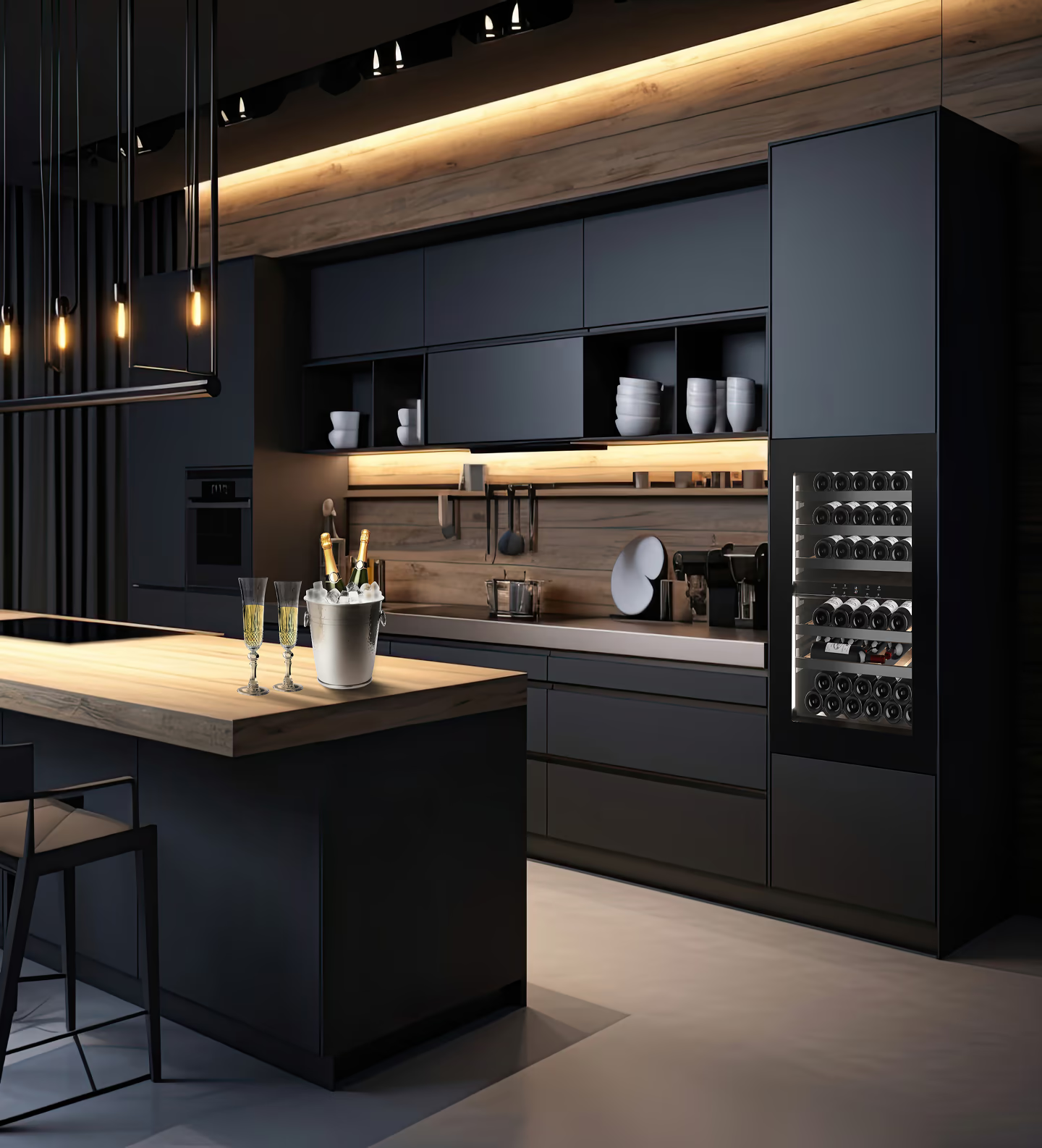
In many cases, Nestor Wine offers a self-ventilation system for its column wine cellars. This system removes the need to worry about these installation constraints.
However, for under-counter or built-in models, you must always ensure that the ventilation grid at the front of the cabinet remains unobstructed to allow air to circulate freely and prevent the compressor from overheating.
Finally, for freestanding wine coolers, it is very important to allow air to circulate all around the unit; you must leave at least 10 cm on each side, at the back and above it. This ensures there is no risk of compressor failure or premature ageing of the components.
You should also avoid placing the wine cabinet near heat sources such as radiators or in direct sunlight, as this could affect its performance. Good ventilation ensures temperature stability and the longevity of your wine cabinet, whilst providing ideal conditions for your wines.
Storing your bottles
To store your unopened bottles properly in your wine cellar, always place them horizontally, with the cork in contact with the wine. This prevents the cork from drying out and the wine from oxidizing. Organize them by type (reds, whites, Champagnes) and by storage temperature if your wine cellar has multiple zones.
Once a bottle has been opened, it is best to keep it upright. This way, the wine is less exposed to the air in the bottle and will oxidise more slowly.
Most Nestor M Wine wine cabinets are fitted with sliding shelves that extend till 50% and 90%. making it easier to reach bottles stored at the back of the shelf.
Distance from heat sources
It is crucial to maintain a distance of at least 30 to 50 centimetres between your wine cabinet and any heat source, such as a radiator, an oven (except if your wine cellar is self-ventilated) or a window exposed to direct sunlight. High ambient temperatures force the compressor to work harder, which can lead to excessive energy consumption, premature wear and tear on the appliance, and, above all, temperature fluctuations that are detrimental to wine preservation. Maintaining this distance not only ensures your wine cabinet performs at its best, but also guarantees the perfect long-term preservation of your bottles.
Reducing Sound Vibrations
To reduce vibrations, whether sound or mechanical, it is important to install your wine cellar on a stable, level and solid surface. Avoid floors that are too soft or uneven, as these amplify vibrations. Ensure that the cabinet does not come into direct contact with neighbouring furniture or walls to prevent the transmission of vibrations. Finally, avoid placing the cabinet near noisy appliances or those that generate vibrations, such as washing machines. These precautions ensure a stable environment, which is essential for your wines to age in optimal conditions without disturbance. A cellar filled to 75% capacity will require fewer motor restarts, thereby reducing vibrations and noise.
Connecting After Transport
After transporting your wine cellar, whether large or small, it is essential to follow a few steps before connecting it. First of all, leave it standing upright for at least 6 to 8 hours (or even 24 hours if it was laid flat during transport) to allow the compressor fluids to stabilise. This prevents damage to the cooling system. Next, install it in a suitable, stable and well-ventilated location, then plug it in. Switch on the cellar and allow it to reach the desired temperature before storing your bottles inside.